Brands we trade
Nvidia Data Center and Workstation GPUs
GTR Supply buys and sells Nvidia data center and workstation graphics hardware by the lot, quoted against the exact part number, and this page is written to help you identify what you are holding. Two things trip people up more than anything else. The first is form factor: a PCIe card and an SXM module are not two versions of the same product, and a module separated from its baseboard is a very different proposition from a card you can slide into a server. The second is naming, because the workstation line has been renamed twice and there are three separate cards whose names read almost identically. Every model name and part number on this page is identification help for the reader, never a stock listing, and nothing here says we hold a particular card. Send the part numbers with quantities and we will tell you where we stand.
How to identify it
Work out what you have.
Where the identifying number physically sits, how to read each field in it, and what it tells a buyer. Useful whether or not you ever trade anything with us.
PCIe, SXM and OAM: three different things to own
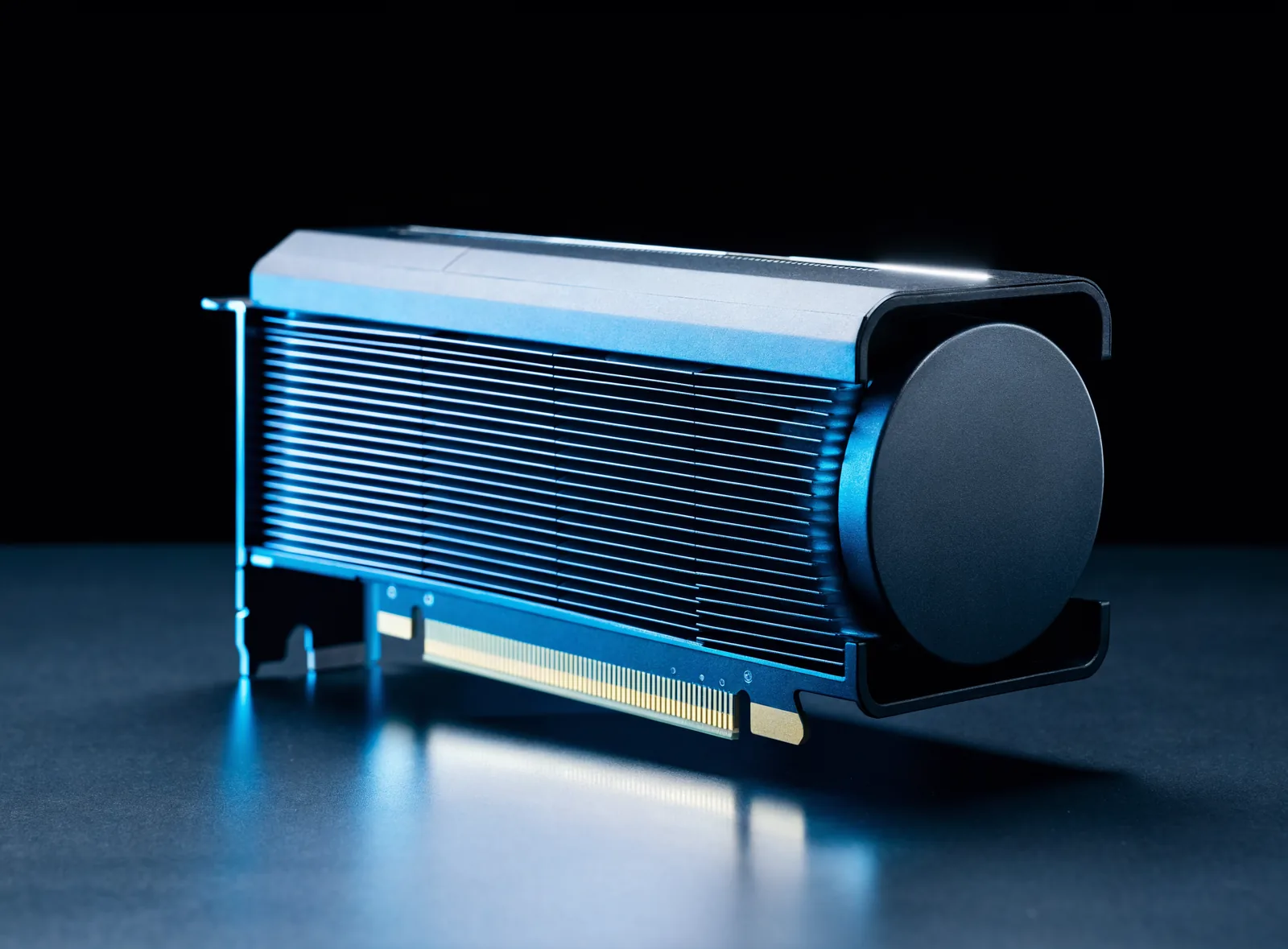
A PCIe accelerator is a card. It slides into a standard expansion slot, draws power through the slot and supplementary connectors, and can move between servers that have the space, the power and the airflow for it. Full length dual slot cards are the common shape.
An SXM module is not a card. It is a mezzanine module that bolts onto a baseboard, has no PCIe edge connector of its own, and communicates with its neighbours over a high speed interconnect rather than through the host. SXM modules come out of complete systems, mounted four or eight at a time on a baseboard, and they are normally traded as that assembly. A single module separated from its baseboard cannot be installed in an ordinary server at all, needs a matched baseboard to be useful, and is a materially different item from a card.
OAM is the open industry standard equivalent of the mezzanine idea, used by other accelerator vendors rather than by Nvidia. It is worth recognising on a list, because a mixed accelerator lot can contain both.
Say which of the three you have before anything else.
Where the data center parts come from, and what comes with them
Data center accelerators arrive in the second hand market from two kinds of machine, and knowing which yours came from answers most of the questions a buyer will ask.
Complete systems built and sold by Nvidia, and OEM servers built around Nvidia's reference baseboard platform, are where SXM modules come from. In both cases the modules are mounted on a baseboard as a set of four or eight, and the baseboard, its heatsinks and its power delivery are part of what makes them usable. If you are clearing one of these systems, say whether the baseboard is coming with the modules, because it changes what the lot is.
PCIe accelerators come out of general purpose rack servers, and what comes with them matters too. Many need a supplementary power cable that is specific to the server they were fitted in, and the bracket, any GPU riser and the high output fan kit that the chassis needed are all separate parts.
Cards fitted with a high speed bridge between two of them should be listed with the bridge, since bridges are model and spacing specific.
The workstation line, renamed twice
The professional workstation line has changed naming scheme twice, and the result is that three genuinely different cards have names that read almost identically. This causes more listing errors than anything else in the category.
The original professional line was branded Quadro. Nvidia then dropped the Quadro name and moved to an RTX A series, so the Ampere generation cards read as RTX A4000, RTX A5000 and RTX A6000. Then the naming changed again, and the following generation puts the architecture name at the end instead, so the cards read as RTX 4000 Ada, RTX 5000 Ada and RTX 6000 Ada. The newest generation adds a further word again.
So a Quadro RTX 6000, an RTX A6000 and an RTX 6000 Ada are three different cards from three different generations with three different specifications, and a list that just says RTX 6000 does not identify any of them.
Copy the whole name including the letter before or the word after the number, or photograph the sticker on the card itself.
Cooling, chassis fit and what is entitled separately
Cooling is the physical property that decides where a card can go, and there are three kinds.
Passive cards have no fan at all and depend entirely on the host server pushing a specific volume of air across the heatsink. Most data center accelerators are built this way. Put one in a workstation or a tower, or in a rack server whose fan policy does not recognise it, and it will throttle or shut down with nothing wrong with the card.
Blower cards have a radial fan that exhausts out of the bracket, which is what makes them suitable for multiple card workstations. Axial or open air cards dump heat into the case and are unsuitable for dense rack chassis.
Beyond cooling, some server platforms require a specific enablement kit, high output fans, a riser and a firmware level before a GPU will be cooled properly at all, so an otherwise correct card can fail in a chassis it is nominally supported in.
Software entitlement is a separate matter from the hardware. GTR Supply does not provide or transfer manufacturer licences, warranty, support or firmware entitlement of any kind.
What is in circulation
The families you will meet.
Placing your hardware in the right family does most of the work of describing it. Each note below says what separates that family from the one above it.
Data center PCIe accelerators
Full length passive cards built for rack servers, spanning several generations. Identified by the model name and part number on the sticker on the card body.
SXM modules and baseboards
Mezzanine modules mounted four or eight at a time on a baseboard. Normally traded as the assembly, because a single module cannot be installed in an ordinary server.
Complete accelerator systems
Whole machines built around a baseboard of modules, with their own power, cooling and networking. A very different item to move and to describe from a loose card.
Workstation RTX A series
The Ampere generation professional cards, where the letter comes before the number. Blower cooled and built for multiple card workstations.
Workstation Ada generation
The following professional generation, where the architecture name comes after the number. Different cards from the A series despite nearly identical names.
Quadro heritage cards
The professional line before the renaming, still widely in circulation. A Quadro RTX card and an RTX A card are different generations, so list the full name.
Virtualisation focused cards
Multi user cards built for virtual desktop deployments. The hardware and the software entitlement are separate things, and only the hardware travels with the card.
Mellanox networking and DPUs
The adapters, smart adapters and switches that came into Nvidia with the Mellanox acquisition. Frequently in the same racks and worth listing on the same sheet.
The same categories, every manufacturer
The families above are this manufacturer's own lines. The category pages carry the wider list, everything that circulates in each category whoever built it, with the part number prefix or physical marker that identifies each one. They are identification help rather than stock lists.
None of this is a stock list
Every model name and part number on this page is identification help for the reader. None of it is a stock listing, and nothing here says that GTR Supply holds a particular item. Send the part number and the quantity you need and we will tell you where we stand.
What it is worth
What decides the number.
Condition is only part of it. These are the things that genuinely move a valuation in this line, and most of them are still in your hands when you write the list.
- Form factor, since a PCIe card, an SXM module and a complete system are three different propositions rather than three versions of one
- For SXM, whether the baseboard comes with the modules or is being kept, which changes what the lot actually is
- Generation and memory capacity, which is where most of the difference between two similar looking cards sits
- Cooling type, because passive, blower and axial cards suit completely different chassis
- The exact model name including the letter or word that separates one generation from another
- Whether the supplementary power cables, brackets, risers and any high speed bridges are with the cards
- Physical condition of the bracket, shroud and edge connector, since these decide whether a card can be installed at all
- Quantity, because accelerators are placed in batches more readily than in ones and twos
- Whether the cards are still installed in the nodes they came from, which usually makes them easier to describe
Both sides of the desk
We supply it, and we buy it.
If you are buying
On the selling side GTR Supply supplies data center accelerators and workstation cards in volume, tested and graded, quoted against the exact part number. This is the fastest moving category the company handles and availability changes weekly, so quotes are issued against live stock rather than a published list and nothing on this page is a stock claim. Send the exact model name, the memory capacity, the cooling type you need and the server model the cards are going into. That last item matters more than buyers expect, because a passive card needs the host to move air across it and some platforms need an enablement kit and a firmware level before they will cool a card at all. If a requirement is one we are not competitive on, you will be told plainly. Pricing normally comes back the same business day.
If you are clearing
On the buying side GTR Supply buys data center and workstation graphics hardware in volume: PCIe cards, SXM modules on their baseboards, complete accelerator systems, and cards still installed in the nodes they came out of. Send the exact model name rather than a shortened one, because the workstation line has been renamed twice and three different cards have names that read almost the same. Say which form factor you are holding, and for modules say whether the baseboard is included. Keep the supplementary power cables, brackets and any bridges with the cards. Valuations in this category carry no expiry and no deadline, and there is no window you have to act inside. Values do move, so the number is reconfirmed against the market on the day rather than quoted once and held.
Common questions
Nvidia GPUs, answered.
What is the difference between a PCIe and an SXM GPU?
A PCIe accelerator is a card. It slides into a standard expansion slot, draws power through the slot and supplementary connectors, and can move between any server with the space, the power and the airflow for it.
An SXM part is not a card at all. It is a mezzanine module that bolts onto a baseboard, has no PCIe edge connector of its own, and talks to the modules beside it over a high speed interconnect rather than through the host. Modules come mounted four or eight at a time on a baseboard, and the baseboard, its heatsinks and its power delivery are what make them usable.
That is why the two are priced and placed very differently. A single SXM module separated from its baseboard cannot be installed in an ordinary server and needs a matched baseboard to be useful.
So when you write to GTR Supply, say which you have first, and for modules say whether the baseboard is coming with them. It changes what the lot is.
Is an RTX A6000 the same as an RTX 6000 Ada?
No. They are different cards from different generations, and the naming is genuinely confusing rather than you having missed something.
The professional line was called Quadro, then moved to an RTX A series where the letter comes before the number, then changed again so the architecture name comes after the number. So a Quadro RTX 6000, an RTX A6000 and an RTX 6000 Ada are three separate cards with three different specifications, and a list that just says RTX 6000 does not identify any of them.
The reliable fix is to copy the whole name, including the letter before the number or the word after it, exactly as it appears. The card itself carries a sticker with the model and a part number on the body or the bracket, and that is the best thing to photograph.
Send GTR Supply the full name and the quantity, or a photograph of the sticker, and there is no ambiguity left to resolve.
How long is a GPU valuation good for?
There is no expiry on it and no window you have to act inside. GTR Supply does not put a deadline on a valuation in this category or in any other, and you will not be told a number is only good for a set number of days.
What is true is that values in this category move more than in any other the company handles, because supply arrives in bursts from compute refreshes and demand for the same parts is intense. That means a number given several weeks ago may have moved in either direction, so it is reconfirmed against the market on the day rather than quoted once and held indefinitely.
That is a statement about the market, not a sales tactic, and it cuts both ways: values in this category have risen as often as they have fallen.
If you have a standing quantity to clear rather than a one off, say so, and the conversation can be a standing one rather than a single transaction.
Guides
Identifying it is half the job. These cover what a buyer actually does with your list once you send it, and what the words on a quote mean before you agree to any of them.
Grade A vs Grade B Hardware Explained
What a condition grade covers, what it cannot cover, and why the same letter means two different things at two suppliers.
How Much Is My Used Server Worth
The four things that set a number, why no price list exists, and what indicative really means.
What Is a Hardware Lot Manifest
The document that lets you price a mixed lot line by line instead of guessing at an average.
Hardware we hold
Clearing it rather than buying
Trademarks
All product and company names are the trademarks of their respective owners. GTR Supply is an independent trader with no affiliation to, authorization from, or endorsement by any manufacturer named on this page.
Tell us the part number and the quantity.
Buying or selling. Send what you are looking for, or a photograph of what you are holding, and we will tell you where we stand. Pricing and valuations normally come back the same business day.
Prefer WhatsApp? Message us on (945) 397-7765