
Sell to GTR
Sell Used Storage Arrays and Disk Shelves
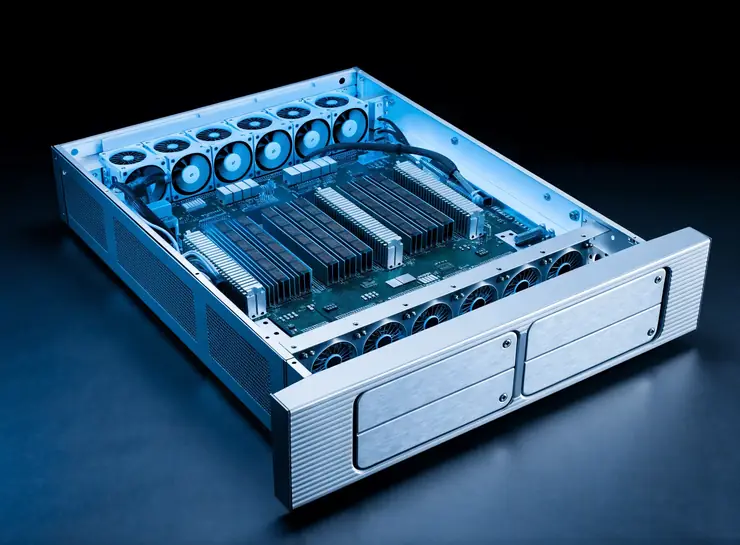
GTR Supply buys used storage arrays, and this is one of the categories most often written off before anyone asks. We take SAN and NAS heads, JBOD enclosures, disk shelves and expansion trays, spare controllers, and the sleds and rails that go with them. Shelves are bought populated or empty, so an enclosure whose drives have already gone somewhere else is still worth listing. Equipment that has passed the end of its vendor support life is still bought, and support status on its own is not a reason to leave a rack standing. What we need is the model, how many controllers and shelves there are, and how the shelves are populated, broken down by capacity and interface rather than as one total. Say whether the drive sleds are included, because on many platforms the sleds are the awkward part to replace.
What we take
Storage Arrays we buy.
- SAN and NAS array heads and controllers
- JBOD enclosures, disk shelves and expansion trays
- Shelves populated with drives, and shelves that are completely empty
- Spare controllers, cache modules and array power supplies
- Drive sleds, blanking sleds, rails and bezels
- SAS expansion cabling and host bus adapters that go with the array
- Arrays past their vendor support life
Buying rather than clearing? See the Storage Arrays we supply by the lot.
What your list needs
Write these down.
- Array model and family, from the badge or the rear label
- Controller count, and whether the controllers are a redundant pair
- Shelf count, and how many shelves are populated
- Drive population per shelf, broken down by capacity and interface
- Whether the drive sleds are included, and whether empty bays have blanking sleds
- Whether the array is still racked, cabled and powered
- Whether rails and bezels are with the units
Missing some of it?
Send it anyway and write unknown against the gaps. An honest gap is easy to price around. A wrong specification found at collection is what forces a valuation to be revised.
Not certain what is on the pallet? See the 10 families of Storage Arrays that circulate on the secondary market and how to tell them apart, each with the part number prefix or the physical marker that identifies it. That page is identification help for writing this list rather than a stock list.
Identify what you have
Most of what a valuation needs is a model number read correctly. The catch with Storage Arrays is that the number sits in a different place on every manufacturer's hardware, and reads differently once you have found it. These pages show where it physically is, how to read each field in it, and what the fields mean. They are identification help rather than stock lists. If typing the list is not realistic, a photograph of the right label is usually enough.
Supermicro Servers: How to Identify What You Have
Why there is no service tag, and what to photograph instead
Enterprise SSD Brands: Samsung, Micron, Solidigm and Kioxia
Samsung: reading an MZ part number
Seagate Exos Drives: Reading an ST Part Number
Reading an ST part number
WD Ultrastar and HGST: One Company, Three Labels
Three labels, one company, and why the old numbers are still live
Every brand GTR Supply buys and sells, grouped by category, with the identification detail for each one.
What moves the number
Up, and down.
Condition is only part of it. Most of what decides a valuation is how the lot is put together and how accurately it is described, and both of those are still in your hands when you write the list.
Moves it up
- A complete array offered whole, head and shelves together
- Sleds included, including blanking sleds for the empty bays
- Fully populated shelves with a single drive capacity throughout
- A redundant controller pair rather than a single surviving controller
- Rails and expansion cabling included
Moves it down
- Shelves stripped of drives and sleds before the list was written
- A single controller where the pair has been split up
- Missing power supplies, fan modules or blanking sleds
- Drive population given as a total rather than by capacity and interface
- Damage to shelf backplanes or bent chassis ears from a rushed de-rack
Free valuation
Get a number on your Storage Arrays.
No obligation. Send what you have and we will tell you what it is worth and how quickly we can move it.
Clearing more than one category? See everything GTR Supply buys. Mixed lots are normal, and the whole room is usually worth more than the parts of it offered separately.
Purchasing desk
Daniel Maxwell
Procurement Specialist
Evan Parker
Sourcing Specialist
Common questions
Selling Storage Arrays, answered.
Do you buy the enclosures on their own, without the drives?
Yes. GTR Supply buys disk shelves and JBOD enclosures empty as well as populated, so an enclosure whose drives went elsewhere is still worth listing rather than scrapping.
An empty shelf is a real item. Organisations expanding an array they already run need shelves that match it, and matching shelves for an installed platform are harder to find than the drives that go in them.
What makes the difference on an empty shelf is what is still attached to it. Sleds, blanking sleds, both power supplies, the fan modules, the expansion controllers on the rear and the rails all count. A shelf with all of them is straightforward. A shelf that has been stripped down to the sheet metal is a much smaller proposition.
So if the drives are already gone, keep the sleds with the shelf rather than binning them, and say on the list what is still fitted.
Should I sell the array whole or pull the drives and sell them separately?
Offer it whole and let us tell you. Splitting an array before it is valued is one of the more expensive habits in this trade, and it is difficult to reverse once the pieces are on separate pallets.
The reason is that the pieces stop fitting each other. Drives come out, sleds get separated from the drives, the shelves get stripped, and what is left is three lots that each have to find their own buyer instead of one lot that a single buyer can install. The parts almost never add back up to the whole.
There are cases where splitting is right, usually when the drives are a common capacity in real volume and the enclosures are an obsolete platform. That is a judgement worth making with the numbers in front of you.
Send the array as it stands and GTR Supply will tell you which way round it works better.
Do you buy arrays that are out of support or end of life?
Yes. GTR Supply takes working stock, untested lots and end of life equipment, and support status on its own is not a reason to leave a rack standing.
Support expiry is a contract event, not a hardware event. The array carries on working exactly as it did the day before, and the organisations that buy it are usually running the same platform themselves and keeping spares against it rather than putting it into a new production role. Spare controllers and shelves for a platform that is no longer sold can be worth more to those people than the equivalent current generation part.
The practical effect is that the number is driven by how many people still run the platform, not by whether a support contract exists.
List it the same way as anything else: model, controller count, shelf count and drive population. Note that it is out of support and leave the rest to us.
How do I identify a storage array and its shelves?
The head unit normally carries the family name on the front bezel, and the exact model is on a label at the rear near the power supplies or on a pull tab at the front. Shelves are labelled the same way, and they are frequently a different model number from the head.
Write both down. It is common for one array family to have been sold with two or three different shelf generations over its life, and they are not interchangeable, so a list that names only the head leaves the largest part of the rack undescribed.
If the array is still powered and reachable, its management interface will report the model, the controller pair, every shelf and the full drive population in one place, which is far quicker than counting bays by hand.
Otherwise photograph the front of the rack and the rear of one shelf. That is usually enough for us to identify the platform.
Guides
Clearing Storage Arrays is mostly a description exercise. These cover what a buyer is actually pricing and what the words on a quote mean before you agree to any of them.
Clearing more than one category?
Most decommissions are mixed. Send the whole list and we will value it as one lot rather than making you split it up first.
Prefer WhatsApp? Message us on (945) 397-7765