Sell to GTR
Sell Used Hard Drives in Bulk
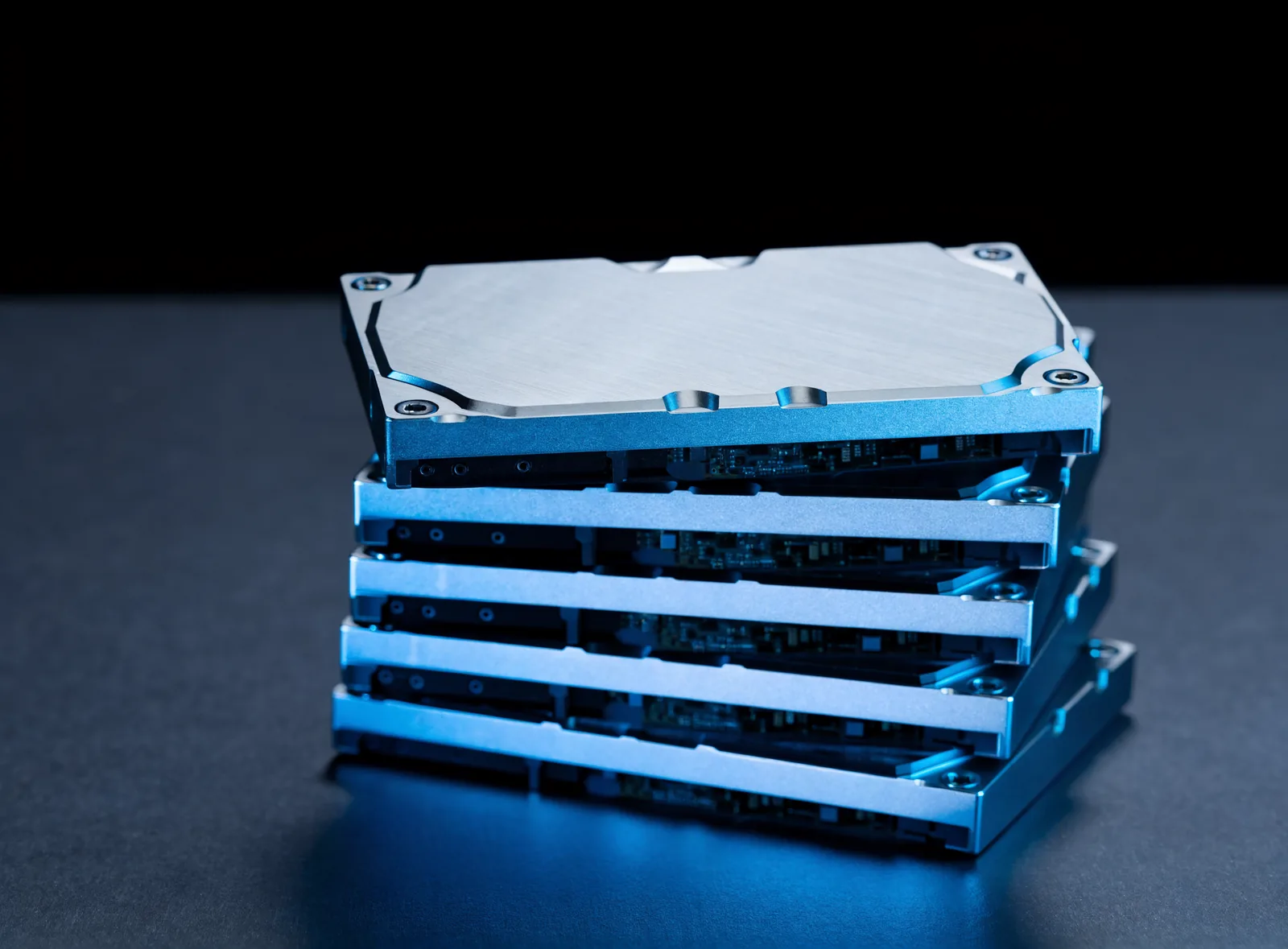
GTR Supply buys used enterprise hard drives in bulk, in quantities from a pallet of array pulls up to the full contents of a storage refresh. We take nearline SAS and SATA, 10K and 15K performance drives, 3.5 inch and 2.5 inch, still in their caddies or bare, and mixed capacity pallets that nobody has sorted. Untested is fine. You do not need to have run any test at all, and you do not need to have separated the good drives from the questionable ones, because that is the work we do here and a lot that has been picked through is usually worth less than the same lot left alone. Every drive is securely wiped and a certificate of destruction is available on request. Tell us if the drives have to be destroyed rather than wiped, because that changes both the collection and the valuation.
What we take
Hard Drives we buy.
- Nearline SAS and nearline SATA high capacity drives
- 10K and 15K RPM performance drives
- 3.5 inch and 2.5 inch form factors
- Array pulls still mounted in their caddies or sleds
- Mixed capacity pallets, unsorted
- Drive lots with no test data at all
- Drives still installed in the servers or shelves they came out of
Buying rather than clearing? See the Hard Drives we supply by the lot.
What your list needs
Write these down.
- Capacity, per line, not as a range across the whole pallet
- Interface: SAS, SATA or nearline
- Form factor, 3.5 inch or 2.5 inch
- Rough quantity per capacity, counted or estimated
- Whether the drives are still in sleds or caddies, and which chassis they came from
- Manufacturer, if the labels are still readable
- Any test data you happen to hold, though none is required
Missing some of it?
Send it anyway and write unknown against the gaps. An honest gap is easy to price around. A wrong specification found at collection is what forces a valuation to be revised.
Not certain what is on the pallet? See the 9 families of Hard Drives that circulate on the secondary market and how to tell them apart, each with the part number prefix or the physical marker that identifies it. That page is identification help for writing this list rather than a stock list.
Identify what you have
Most of what a valuation needs is a model number read correctly. The catch with Hard Drives is that the number sits in a different place on every manufacturer's hardware, and reads differently once you have found it. These pages show where it physically is, how to read each field in it, and what the fields mean. They are identification help rather than stock lists. If typing the list is not realistic, a photograph of the right label is usually enough.
Seagate Exos Drives: Reading an ST Part Number
Reading an ST part number
WD Ultrastar and HGST: One Company, Three Labels
Three labels, one company, and why the old numbers are still live
Every brand GTR Supply buys and sells, grouped by category, with the identification detail for each one.
What moves the number
Up, and down.
Condition is only part of it. Most of what decides a valuation is how the lot is put together and how accurately it is described, and both of those are still in your hands when you write the list.
Moves it up
- One capacity in real volume rather than a spread of odd sizes
- Caddies and sleds included with the drives
- Labels intact and readable, so capacity and interface can be confirmed on arrival
- High capacity nearline drives, which clear faster than small legacy sizes
- The whole pallet offered as it stands, unsorted
Moves it down
- A list that gives a total drive count with no capacity breakdown
- Small legacy capacities, which take longer to place whatever their condition
- Drives removed from sleds when the sleds are still sitting in the array
- Physical damage, missing screws in the sled, bent connectors
- Labels removed or painted over, so nothing can be confirmed without testing every unit
Free valuation
Get a number on your Hard Drives.
No obligation. Send what you have and we will tell you what it is worth and how quickly we can move it.
Clearing more than one category? See everything GTR Supply buys. Mixed lots are normal, and the whole room is usually worth more than the parts of it offered separately.
Purchasing desk
Daniel Maxwell
Procurement Specialist
Evan Parker
Sourcing Specialist
Common questions
Selling Hard Drives, answered.
Do I need to test the drives before selling them?
No. GTR Supply accepts drive lots with no test data at all, and that is not a concession, it is how most lots arrive.
Testing a pallet of drives properly takes equipment and days of machine time, and the result is only as good as the process behind it. Doing it yourself with a general purpose disk utility on a desktop rarely tells us anything we can rely on, so it is effort that does not come back to you.
What matters more is that the lot stays intact. The common mistake is to test a pallet, pull out everything that looks perfect, sell that separately, and offer us the remainder. The remainder is then worth what a remainder is worth, and the two halves together are worth less than the pallet would have been.
If you already hold test data because your own tooling produced it, send it. It speeds things up. It is just not a requirement.
How do I know what capacity and interface my drives are?
It is printed on the drive label, on the top face of a 3.5 inch drive and usually on the side of a 2.5 inch one. The capacity is the large number. The interface is normally stated as SAS or SATA on the same label, and nearline drives will often say so directly.
If the label is unreadable, the connector settles it. A SATA drive has two separate connectors with a visible gap between the data and power sections. A SAS drive has a single continuous connector with no gap. That one look tells you which family a drive belongs to without powering anything on.
Speed is on the label too, usually as 7.2K, 10K or 15K. Nearline drives run at 7.2K.
If you have a pallet and not an afternoon, photograph one label per stack and give us rough counts. That is enough for GTR Supply to work from.
Should I take the drives out of the caddies?
No, leave them in. Caddies and sleds go with the drives and add to what the lot is worth, and taking them out is time you spend to make the lot less useful.
A drive in its original sled can go straight back into the chassis family it came from. A bare drive needs a tray bought separately before it can be racked at all, and trays for some platforms cost more than a used drive is worth. That gap is exactly why the sleds are worth keeping with the drives.
The same applies to the screws. A sled with its four screws missing is noticeably less useful than a complete one, so if the drives are already out, keep the fixings with them.
If you specifically need the sleds back because you are keeping the chassis in service, that is a normal thing to ask for. Say so on the list and we will price the drives bare.
What happens to the data on the drives?
Every drive is securely wiped, and a certificate of data destruction is available on request so the chain of custody is documented for your compliance team.
Raise the requirement before collection rather than after. Organisations need different things from this step. Some need certificates issued against specific serial numbers. Some need drives destroyed physically rather than wiped. Some need the drives pulled and retained on site before anything else is allowed to leave the building. All three are workable, and each one changes what the lot is worth and how the collection has to be organised, so each needs agreeing while the valuation is still being put together.
Drives that cannot be verified as clean are not sold on as drives.
If you have a written disposal policy, send it with the list. Working from the document is faster than working through the requirements one question at a time.
Guides
Clearing Hard Drives is mostly a description exercise. These cover what a buyer is actually pricing and what the words on a quote mean before you agree to any of them.
Grade A vs Grade B Hardware Explained
What a condition grade covers, what it cannot cover, and why the same letter means two different things at two suppliers.
What Is a Hardware Lot Manifest
The document that lets you price a mixed lot line by line instead of guessing at an average.
What to Check Buying Used Server Drives
How much life is spent, has it begun failing, and can you verify it. In that order, before price.
Drive Interfaces: SAS, SATA, NVMe and U.2
Start at the backplane, not at the drive. What your controller accepts is the question that costs money.
Clearing more than one category?
Most decommissions are mixed. Send the whole list and we will value it as one lot rather than making you split it up first.
Prefer WhatsApp? Message us on (945) 397-7765