
Sell to GTR
Sell Decommissioned Data Center Equipment
GTR Supply buys decommissioned data center equipment, from a few racks up to the contents of a whole room. Be clear about what that means, because the word decommissioning covers two different jobs and mixing them up is what causes projects to stall. GTR is the buyer. We purchase the equipment, agree terms before collection, and arrange pickup and freight so the hardware leaves your site. We are not the decommissioning contractor: the physical work inside the room, the disconnection, the de-racking and the labelling, is separate work with its own owner, and if it has not been assigned yet that needs settling before a date can be agreed. Tell us where the project stands and what is already done. Servers, storage, networking, drives, memory, processors and graphics cards are all in scope, working, untested or end of life.
What GTR Supply is in a decommission, and what it is not
GTR Supply is the buyer. We value the equipment, agree the terms before anything moves, arrange pickup and freight, and pay on verification once the delivery is checked against the list the valuation was built on.
What we are not is the decommissioning contractor. Disconnecting live equipment, de-racking it, labelling it and getting it to a loading area is separate work, and it belongs to whoever your project has assigned it to. Some organisations do it with their own facilities team, some use a specialist contractor, and some have already done it before they contact anybody. All three are fine.
Saying this clearly at the start saves a fortnight. The most common way a decommission slips is that everyone assumes somebody else is doing the physical work, and it surfaces on the day the vehicle is booked. Tell us what stage the room is at and who owns the work inside it, and the collection can be planned around the truth.
Start from the rack elevation, not from the pallet
The fastest way to get a whole room valued is to send what you already have, which is usually a rack elevation, an asset register or a data center inventory export. You do not need to turn it into a purpose built manifest first.
What matters is that the items carrying most of the value are described properly. For servers that means the model and generation with the processor and memory configuration. For storage that means the array model, the controller and shelf count and how the shelves are populated. For networking it means the switch model, the port count and the port speed. For drives it means capacity, interface and rough quantity.
A short list that gets those right is valued faster and more accurately than a long inventory describing everything vaguely. Where something is unknown, mark it unknown. An honest gap is easy to price around, and a wrong specification discovered at collection is what forces a valuation to be revised.
Offer the room, not the good bits
Decommissions are worth more offered whole. The instinct is to identify the attractive equipment, place that separately, and offer the rest to whoever will take it, and that instinct reliably costs money.
What happens is that the parts carrying the value leave first: the current generation nodes, the accelerators, the high capacity drives, the recent switches. What remains is a room of equipment that has to find its own buyer on its own merits, and it does not add back up to what the whole would have been worth.
Mixed is normal. Most decommissions are not a clean batch of one model, and GTR Supply would rather take the room intact than have you break it up. Racks, rails, PDUs, cabling, spare parts on the shelf and the boxes in the store cupboard all count. So does equipment already pulled and stacked on pallets in a corner from a previous phase.
Data, before anything moves
Every drive is securely wiped and a certificate of data destruction is available on request, so the chain of custody is documented for your compliance team.
Raise the requirement early, because this is usually the step that decides whether an internal disposal gets approved at all. Organisations need different things. Some need certificates issued against specific serial numbers. Some need drives destroyed physically rather than wiped. Some need drives pulled and retained on site before anything else is allowed to leave the building.
All three are workable, and each one changes what the equipment is worth and how the collection has to be organised, so each needs agreeing while the valuation is being put together rather than afterwards. Switches and routers are reset to factory defaults, which clears stored configuration, logs and credentials from them as well.
If you have a written disposal policy, send it with the asset list rather than working through the requirements one question at a time.
Collection, phasing and payment
Pickup and freight are arranged for you. What decides whether that goes smoothly is site information, so send it before anything is booked: whether there is a loading dock, whether a tail lift is needed, whether access runs through a goods lift or a staircase, and whether there are time windows or security procedures for contractors. A booking made without that is the most common reason a collection has to be rescheduled.
Tell us as well if the equipment still needs de-racking, because that is work to be planned and staffed rather than discovered on the day.
For larger decommissions a collection schedule is agreed with you rather than a vehicle being sent hopefully. Phased projects are normal: rooms empty in stages, contracts end at different dates, and equipment often has to keep running until a migration completes.
Terms are agreed before collection and payment is prompt on verification, which means confirming that what arrived matches the list the valuation was based on.
What is in the room
The detail a room valuation is built from.
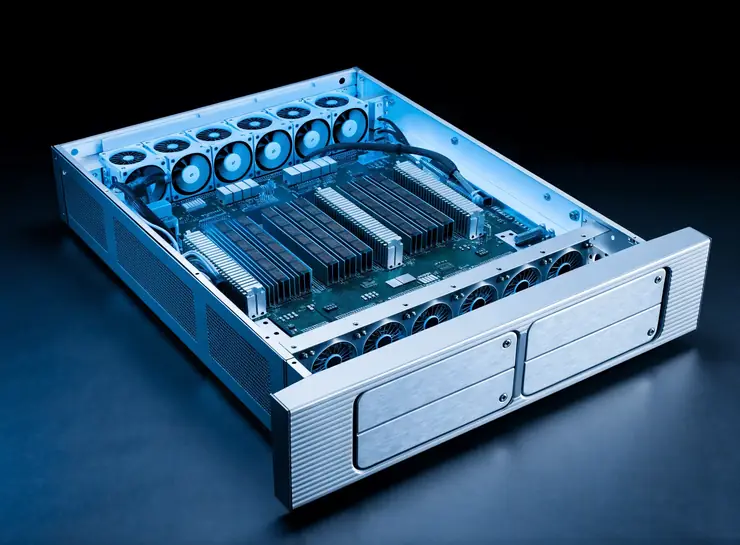
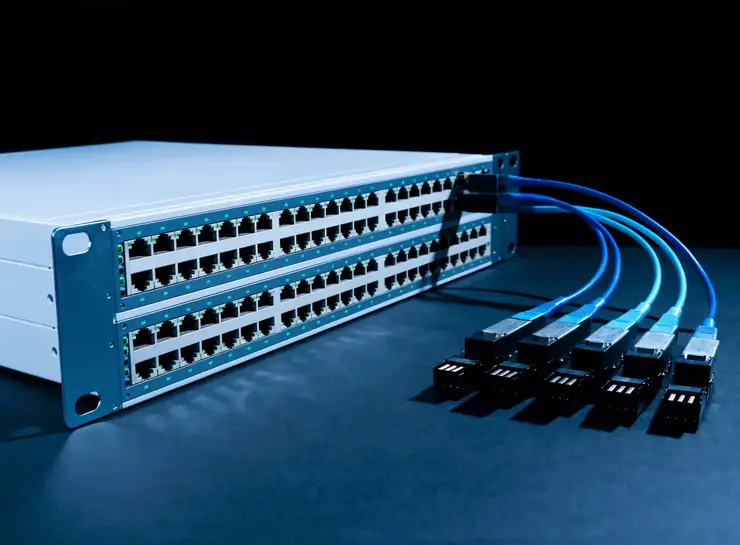
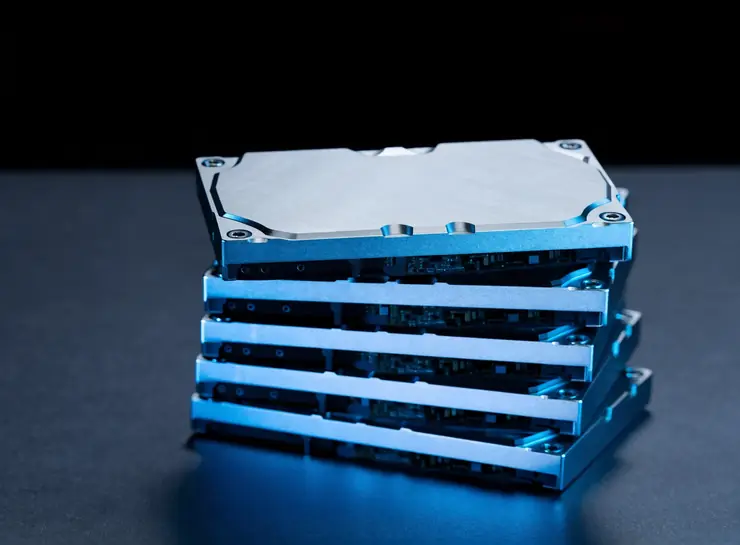
A whole room is still valued line by line, and the lines that carry most of the value are the same four every time. Each page below says exactly what to write down for that hardware, and what moves the number up or down.

Free valuation
Tell us what you are clearing.
No obligation. Send what you have and we will tell you what it is worth and how quickly we can move it.
Send whatever you already have. A rack elevation, an asset register or an inventory export is enough to start, and if the project is phased, say which phase is confirmed and which is still provisional. See everything GTR Supply buys.
Purchasing desk
Daniel Maxwell
Procurement Specialist
Evan Parker
Sourcing Specialist
Common questions
Decommissioning, answered.
Do you de-rack and pack the equipment yourselves?
GTR Supply is the buyer rather than the decommissioning contractor, so the physical work inside the room is not something this page will claim. We purchase the equipment, agree the terms before anything moves, and arrange pickup and freight so it leaves your site.
What we need from you is a clear picture of where the project stands. Tell us if the equipment still needs de-racking, because that is work to be planned and staffed rather than discovered on the day the vehicle arrives.
Plenty of sellers have already done it. Racks get emptied during a migration, equipment ends up stacked on pallets in a corner, and by the time anybody thinks about selling it the physical work is behind them.
If yours is not at that stage, say so early. The collection can be planned around it, and it is far cheaper to plan around than to resolve on the day.
We are decommissioning in phases. Can you buy it in stages?
Yes, and phased is closer to normal than unusual. Rooms empty in stages, contracts end on different dates, and equipment routinely has to keep running until a migration finishes.
Send the whole scope even if only the first phase is available now. Knowing the full picture changes how GTR Supply can approach it, because a commitment across the whole project is a different proposition from a series of unconnected small collections, and it lets stock be planned for rather than quoted twice.
For larger decommissions a collection schedule is agreed with you rather than a vehicle being sent and hoped for. That means dates that fit your migration rather than dates that fit a truck.
What does need saying is which phase is confirmed and which is still provisional. A valuation built on equipment that turns out to be staying is a valuation that has to be revised, and nobody enjoys that conversation.
What should be on the list for a whole room?
Whatever you already have, first. A rack elevation, an asset register or an inventory export is usually enough to start, and building a purpose made manifest before contacting anybody just delays the valuation.
What matters is that the high value items are described properly. Server model and generation with the processor and memory configuration. Storage array model with the controller count, shelf count and drive population by capacity and interface. Switch model with port count and port speed. Drives by capacity, interface and rough quantity.
Include the things that get left off: rails, PDUs, cabling, spare parts on the shelf, boxes in the store cupboard, and equipment already pulled onto pallets during an earlier phase.
Mark anything unknown as unknown rather than guessing. An honest gap is easy to price around. A wrong specification discovered at collection is what forces a valuation to be revised, which is a worse outcome for both sides.
Who handles the data on a decommission?
Every drive is securely wiped and a certificate of data destruction is available on request, so the chain of custody is documented for your compliance team. Switches and routers are reset to factory defaults, which clears stored configuration, logs and credentials as well.
Raise your requirement while the valuation is still being put together, because this is usually the step that decides whether the disposal gets internal approval. Some organisations need certificates against specific serial numbers. Some need drives destroyed physically rather than wiped. Some need drives pulled and retained on site before anything else leaves the building.
All three are workable with GTR Supply, and each changes both what the equipment is worth and how the collection has to be organised, so none of them should surface after the terms are agreed.
If you have a written disposal policy, send it with the asset list. Working from the document is faster than working through it question by question.
Do you decommission for other people?
If hardware comes through your business continuously rather than once, there is a standing arrangement for that.
Prefer WhatsApp? Message us on (945) 397-7765