Brands we trade
Supermicro Servers: How to Identify What You Have
GTR Supply buys and sells used Supermicro servers, motherboards, chassis and backplanes by the lot, and this page exists because Supermicro is harder to identify than anything else in the rack. There is no service tag. There is no single number that resolves to the original build, because a Supermicro system is a set of separately numbered parts that have very often been recombined since it left the factory. The number that actually matters is silkscreened on the motherboard itself, and a photograph of that board is worth more than any sticker on the outside of the case. This page shows you where each number physically lives and how to read it. Every part number here is identification help for the reader, never a stock listing. Send a photograph of the board and a quantity and we will tell you where we stand.
How to identify it
Work out what you have.
Where the identifying number physically sits, how to read each field in it, and what it tells a buyer. Useful whether or not you ever trade anything with us.
Why there is no service tag, and what to photograph instead
Dell and HPE sell finished machines and keep a record of each one, so a tag on the front resolves to a build. Supermicro sells complete systems, but it also sells the motherboards, chassis, backplanes, risers, power supplies and rails separately, and a very large share of the machines in circulation were assembled by somebody else from those parts. There is no central record to look up, and a sticker on the case can honestly describe a chassis that now contains a different board.
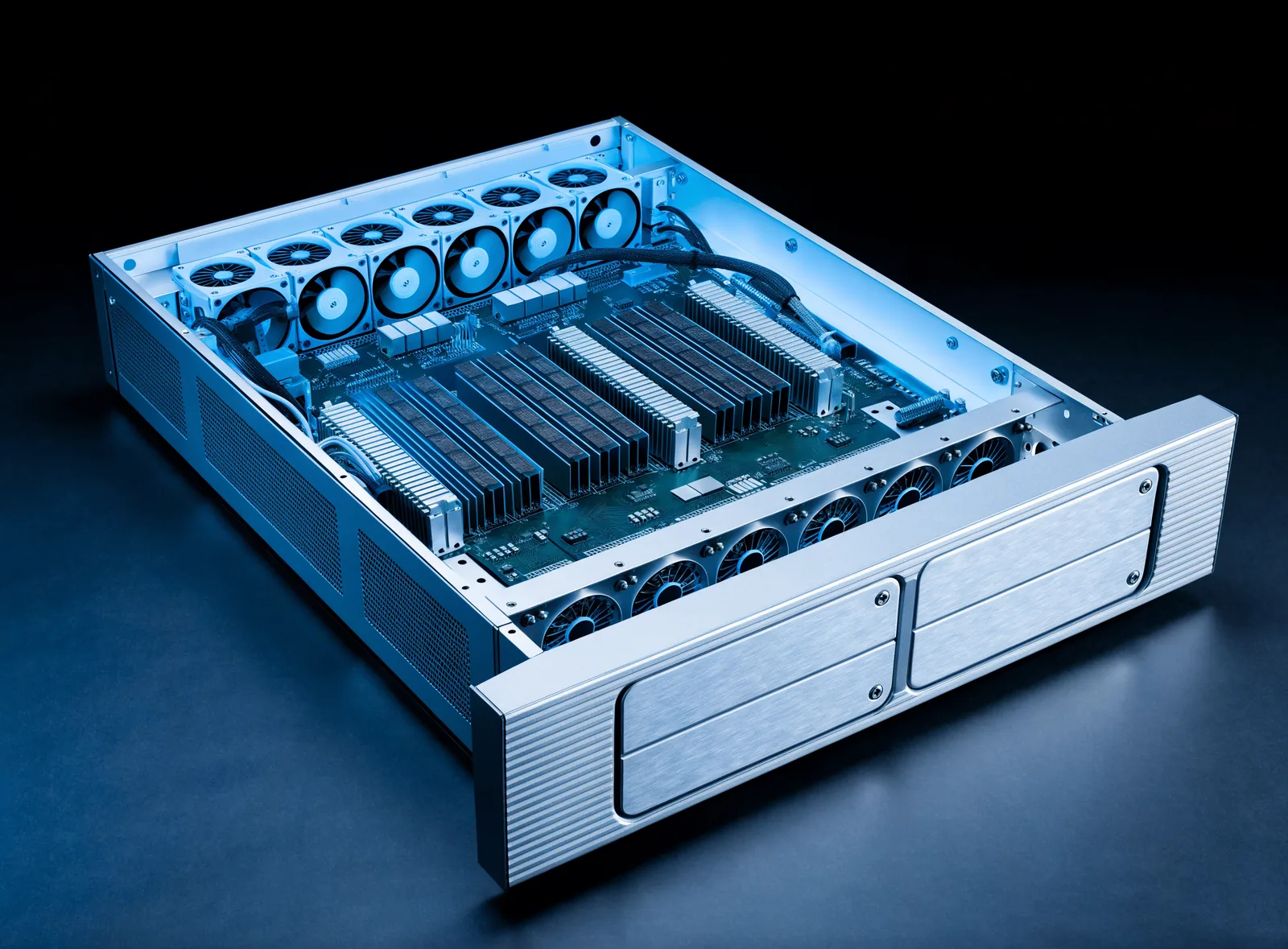
So photograph the motherboard. The model is silkscreened directly onto the board, in white text on the PCB itself, usually near an edge and often beside the memory slots or between the expansion slots. It is printed on the board rather than on a label, so it cannot fall off and it cannot be wrong.
Then photograph two more things: the sticker on the rear of the chassis, and the backplane behind the drive bays. Those three numbers between them describe the machine far better than any single identifier could.
SYS, MBD, CSE, BPN and the rest of the prefixes
Supermicro part numbers begin with a prefix that says what kind of thing you are holding, and knowing the five common ones lets you write a list that a buyer can price line by line.
SYS is a complete system, board and chassis together as sold. AS is the same thing on the AMD platforms, and SSG is a storage system with a high bay count.
MBD is a motherboard sold as a product in its own right. CSE is a chassis. BPN is a backplane, the board sitting behind the drive bays that the drives plug into. Beyond those, AOC is an add on card such as a host bus adapter or a network card, MCP covers mechanical parts including rail kits, PWS is a power supply module, RSC is a riser and SNK is a heatsink.
This matters for a seller because those parts are separable and separately valuable. A pile described as ten servers may be ten chassis, twelve boards and forty rails, and listing it by prefix turns it into something that can be valued properly.
Board generations: X10 to X13 on Intel, H11 to H13 on AMD
The first characters of a Supermicro board number give you the generation, and the generation gives you the processor platform, which is the thing that actually decides what the board is.
On Intel, X9 boards ran Xeon E5 v1 and v2, X10 ran E5 v3 and v4, X11 covers first and second generation Xeon Scalable, X12 covers third generation and X13 covers fourth and fifth. On AMD, H11 boards are for the first EPYC generations on the SP3 socket, H12 continues on SP3 for the later SP3 parts, and H13 moves to the SP5 socket for the current EPYC generation.
After the generation, the next letter is the socket count. S is a single socket board, D is dual and Q is quad. So an X11 board with a D in it is a dual socket Xeon Scalable board.
One suffix is worth knowing. An F in the suffix means the board carries onboard management with a dedicated network port. A board without it has no remote management at all, which is a real difference to a buyer.
Chassis and backplanes, where most of the value hides
The chassis number tells you the size and the drive layout, and the first digit is the rack height. A CSE number beginning 1 is a 1U chassis, 2 is 2U and 4 is 4U. The rest of the number identifies the family and the bay count, so the common 2U twelve bay and 4U twenty four and thirty six bay storage chassis each have their own recognisable number.
The backplane is where the real difference sits, and it is silkscreened on the board behind the drive bays. Two things to read off it. First, whether it is a SAS2 or SAS3 backplane, which is the difference between six gigabit and twelve gigabit drive links. Second, whether it is a direct attach backplane, which needs one controller port per drive, or an expander backplane, which needs only one connection to the controller and shares bandwidth behind it. A twenty four bay chassis with a direct attach backplane and no matching controller is not a usable machine.
Rails are separate parts with their own numbers and they are frequently missing.
What is in circulation
The families you will meet.
Placing your hardware in the right family does most of the work of describing it. Each note below says what separates that family from the one above it.
SuperServer complete systems
Board and chassis sold together under a SYS number. The most straightforward thing to value, provided the sticker still matches what is inside the case.
A Plus AMD systems
The EPYC based systems, carrying an AS prefix rather than SYS. Same chassis families, different boards and a different socket, so they do not interchange with the Intel line.
SuperStorage
High bay count storage systems under an SSG prefix, typically 4U with twenty four to ninety plus bays. The backplane and expander arrangement matters more here than anywhere else.
Twin multi node systems
Two or four independent server nodes sharing one chassis and its power. A node on its own and a populated chassis are different items, so say which you are holding.
SuperBlade and MicroBlade
Blade enclosures with their own switch and management modules. Blades and enclosures are matched to each other and are traded both together and separately.
GPU and accelerator systems
Chassis built for multiple full length cards, with the power, airflow and riser arrangement to support them. Very different internally from a general purpose 2U machine.
Motherboards, chassis and backplanes on their own
MBD, CSE and BPN parts sold and bought separately. This is normal for Supermicro and is why a mixed pile is often worth listing by prefix rather than as systems.
The same categories, every manufacturer
The families above are this manufacturer's own lines. The category pages carry the wider list, everything that circulates in each category whoever built it, with the part number prefix or physical marker that identifies each one. They are identification help rather than stock lists.
None of this is a stock list
Every model name and part number on this page is identification help for the reader. None of it is a stock listing, and nothing here says that GTR Supply holds a particular item. Send the part number and the quantity you need and we will tell you where we stand.
What it is worth
What decides the number.
Condition is only part of it. These are the things that genuinely move a valuation in this line, and most of them are still in your hands when you write the list.
- The board generation, because it sets the processor socket and the memory platform and therefore what the board can still run
- Whether the board carries onboard management with a dedicated port, since a board without it has no remote console
- The backplane type, SAS2 against SAS3 and direct attach against expander, which decides what controller a buyer also needs
- Bay count and chassis height, since a 4U high bay storage chassis and a 2U general purpose one are different markets
- Rails, drive carriers and blanking carriers present, all of which are separate Supermicro parts that go missing
- Whether the power supply modules are both fitted and are the matching pair for that chassis
- Whether the board, chassis and backplane are a coherent set rather than three unrelated parts in one box
- Risers and add on cards still installed, since Supermicro risers are chassis specific and awkward to replace
- A batch of identical builds rather than a pile assembled from mixed parts over several years
Both sides of the desk
We supply it, and we buy it.
If you are buying
On the selling side GTR Supply supplies Supermicro systems, boards, chassis and backplanes in volume, configured and tested rather than shipped as parts for you to reconcile. Because Supermicro is bought as much for rebuild programmes as for finished machines, it is worth saying which you want: a complete tested system, a bare chassis with its backplane and rails, or boards on their own. Send the board generation, the socket count, the processor and memory configuration, the bay count and the backplane type you need, and the build is matched to it. If you are extending an estate, send the board number of a machine you already run, because the generation is what decides compatibility and the chassis alone will not tell you. Nothing on this page is a stock list. Send the specification and a quantity, and pricing normally comes back the same business day against a manifest.
If you are clearing
On the buying side GTR Supply buys Supermicro by the lot, and this is a line where a lot rarely arrives tidy. Complete systems, loose motherboards, bare chassis, backplanes, risers, power supply modules and rails are all bought, including material that has clearly been apart and put back together more than once. Nothing needs testing, sorting or grading first. What helps most is photographs rather than typing: one of the motherboard silkscreen, one of the rear of the chassis, one of the backplane, and a count. Leave rails, drive carriers and blanks with the hardware rather than stripping them out, because on Supermicro these are separately numbered parts with their own buyers. Drives are securely wiped and a certificate of destruction is available on request. Untested lots are normal here rather than an exception.
Common questions
Supermicro, answered.
How do I find the model number on a Supermicro server?
Take the top cover off and read the motherboard. The board model is silkscreened directly onto the printed circuit board in white text, usually near an edge and often beside the memory slots or between the expansion slots. It is printed on the board rather than on a label, so it cannot fall off.
That is the number that matters. There is no service tag on a Supermicro and no central record that resolves a serial to a build, because Supermicro sells boards, chassis, backplanes and rails separately and a great many systems in circulation were assembled from those parts by somebody else. A sticker on the outside of the case can honestly describe a chassis that now holds a different board.
Photograph three things and you have described the machine properly: the board silkscreen, the sticker on the rear of the chassis, and the backplane behind the drive bays. Send those to GTR Supply with a count and no typing is needed at all.
What is the difference between a SYS number and an MBD number?
A SYS number is a complete system as Supermicro sold it, board and chassis together, with the power supplies, backplane and cooling that go with it. An MBD number is a motherboard on its own, sold as a product in its own right rather than as a spare part.
The distinction matters when you write a list, because the two are valued completely differently and a pile of Supermicro often contains both. Ten items described as servers may turn out to be six complete systems and four loose boards, and those are two separate lines on a manifest.
The same logic runs through the rest of the prefixes. CSE is a chassis, BPN is a backplane, AOC is an add on card, MCP covers rails and mechanical parts, and PWS is a power supply module. Each is separately sellable and separately wanted.
List by prefix and the lot becomes something GTR Supply can price line by line rather than an average across a pallet.
Does a Supermicro chassis work with any Supermicro motherboard?
No, and assuming it does is the most common expensive mistake in this line. Three things have to agree before a board and a chassis are a working machine.
The form factor and mounting. Supermicro uses several proprietary board layouts alongside the standard ones, and the standoff positions, rear input and output cutout and riser geometry differ between them.
The backplane and cabling. A twenty four bay direct attach backplane needs enough controller ports to address every drive, while an expander backplane needs one link and shares bandwidth. Whether the backplane is six gigabit or twelve gigabit has to match what the controller and drives expect.
Power and cooling. Chassis power supplies, fan walls and heatsinks are matched to the chassis and to the processor generation, and a passive heatsink built for one airflow arrangement will not cope in another.
When you sell, list the board, chassis and backplane separately and let GTR Supply work out whether they belong together.
Guides
Identifying it is half the job. These cover what a buyer actually does with your list once you send it, and what the words on a quote mean before you agree to any of them.
What Is a Hardware Lot Manifest
The document that lets you price a mixed lot line by line instead of guessing at an average.
Grade A vs Grade B Hardware Explained
What a condition grade covers, what it cannot cover, and why the same letter means two different things at two suppliers.
How to Sell a Decommissioned Hardware Lot
The method: what a buyer prices, how to write the list, and the habit that costs sellers the most.
Hardware we hold
Clearing it rather than buying
Other brands we trade
Trademarks
All product and company names are the trademarks of their respective owners. GTR Supply is an independent trader with no affiliation to, authorization from, or endorsement by any manufacturer named on this page.
Tell us the part number and the quantity.
Buying or selling. Send what you are looking for, or a photograph of what you are holding, and we will tell you where we stand. Pricing and valuations normally come back the same business day.
Prefer WhatsApp? Message us on (945) 397-7765